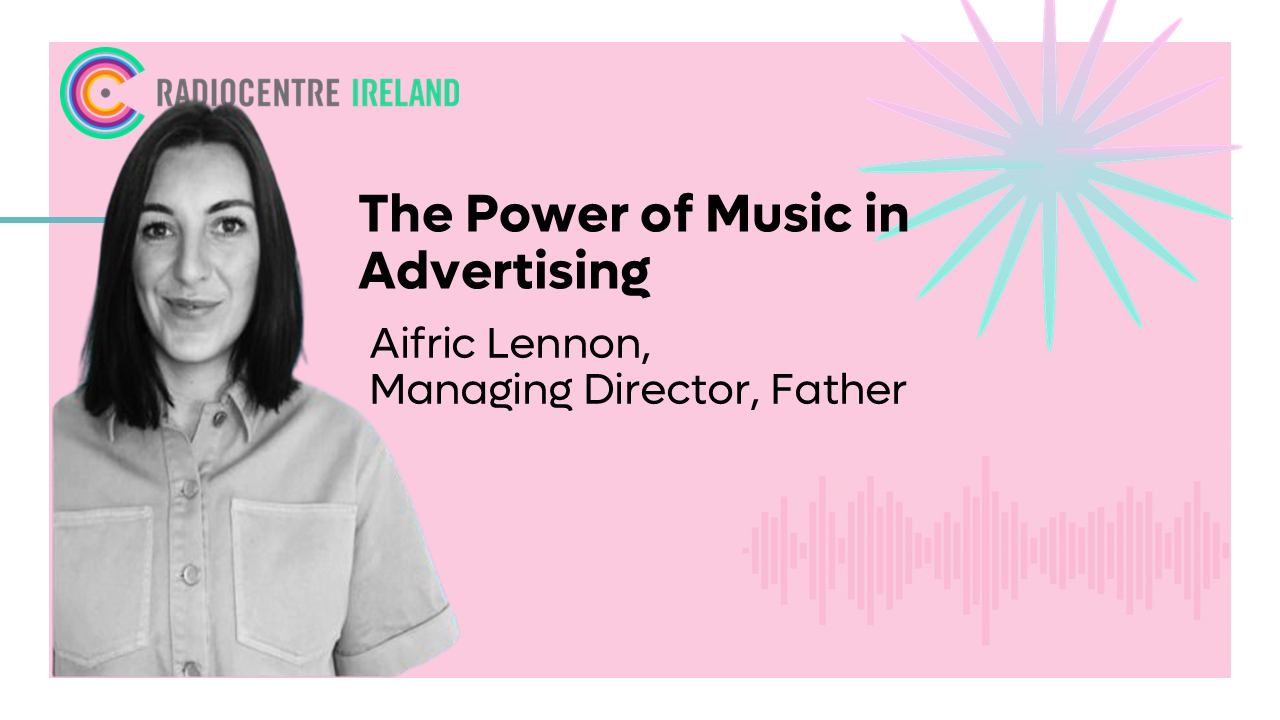
Key takeaways from Radiocentre Ireland’s webinar with Aifric Lennon, Managing Director at Father
Music is one of the most powerful creative tools available to advertisers — yet it is still too often treated as a late-stage “add-on” rather than a strategic asset. In Radiocentre Ireland’s first webinar of 2026, Aifric Lennon, MD at Father, set out a compelling case forwhy brands should take music seriously, how it shapes effectiveness, and what “winning with music” looks like in practice — especially for audio-first channels like radio.
Why music works: behaviour, memory and meaning
Aifric’s central message was simple: music doesn’t just decorate advertising — it changes outcomes. She illustrated this with a mix of classic examples and modern evidence.
Aifric also highlighted recent commercial research indicating that brands that use music strategically are more likely to drive brand preference, loyalty, and sales — reinforcing that music is not merely an aesthetic choice.
Music is a short cut to recall
One of the most striking parts of the session focused on how quickly sound reaches the brain. Aifric explained that audio is processed faster than visuals, making music and sonic cues a direct route to memory and recognition.
To bring this to life, she referenced iconic audio assets and campaigns that many people can identify instantly from just a few seconds — from platform sounds (like Netflix) to brand cues (like Apple) to classic advertising examples. The message for advertisers: music creates mental “handles” that audiences can recall quickly — often without effort.
Music shapes emotion — and brand perception
Music is also a powerful driver of emotional response, but Aifric stressed that emotion must work in service of the brand. A strong track can amplify what an ad is trying to say; the wrong track can undermine it.
Using Sony’s famous “Bouncy Balls” campaign as an example, she showed how music can reflect brand values and purpose — and how a poor, trend-chasing choice can instantly pull the viewer (or listener) out of the experience. The lesson: music should fit the brand story, the brand identity, and the creative idea — not just what’s popular this week.
A key data point shared from academic research: ads using music that fits the story/identity/visuals are far more likely to be recalled than those that do not.
So why is music still an afterthought?
Aifric suggested three main barriers that still stop brands from using music strategically:
New evidence: what the IPA study found
A major highlight was fresh evidence from a study Aifric led in collaboration with the IPA effectiveness database, analysing 150 prominent ads and measuring music’s impact with a large-scale consumer study (7,500 UK participants). The aim was to isolate how music contributes to business effects, beyond general brand impact.
From this research, Aifric presented three clear ways to “win” with music:
1) Customise
Music that is customised to the ad narrative or brand identity can dramatically strengthen impact. Importantly,“customising” doesn’t always require a fully bespoke composition — it could include a re-record, an edit of a licensed track, or a tailored arrangement that better fits the creative.
Well-customised music can significantly increase willingness to pay, underlining music’s role in value perception and pricing power. She also noted that consistency matters: research from Les Binet and Peter Field suggests that using a well-fitting track consistently over time can compound benefits, including effects on price sensitivity.
2) Be original and surprising
Unexpected music choices can drive “fame” —the kind of standout impact that earns attention and talkability. Aifric shared examples where bold music selection delivered humour, contrast, and memorability. The study found that highly surprising music significantly increases the likelihood of driving brand fame, and also correlated with stronger marketing return.
3) Be memorable
Memorable, “sticky” music improves mental availability — helping a brand come to mind more easily. In practice, this often means melody-led hooks, distinctive rhythms, or a recognisable motif that can travel across touchpoints.
What this means for radio and audio-first advertising
How do these insights translate to audio, where there are no visuals? Aifric’s view was clear: the principles apply directly — and may be even more powerful in screenless environments.
Radio and audio deliver reach quickly and cost-effectively, and they integrate into daily routines. In that context, music isn’t supporting the creative — it is the creative architecture. She emphasised the importance of:
Practical recommendations for advertisers
To close, Aifric shared three practical steps for brands and agencies:
Summary
Music is not a finishing touch. Done well, itis a strategic lever that can strengthen memory, emotion, distinctiveness, and commercial results — particularly in audio-first advertising where sound is the primary route to attention.
A strategic approach to music gives brands along-term advantage: more recognition, more consistency, and more impact —across every touchpoint where audio shows up.
Click the buttons below to watch the webinar and download the presentation deck.