As concerns grow about the impact of social media, Simon Kilby, MD, Bauer Media Advertising UK argues that the advertising industry needs to think more carefully about where its money goes – and put trust back at the heart of media investment.
The relationship between society and social media may be reaching a turning point.
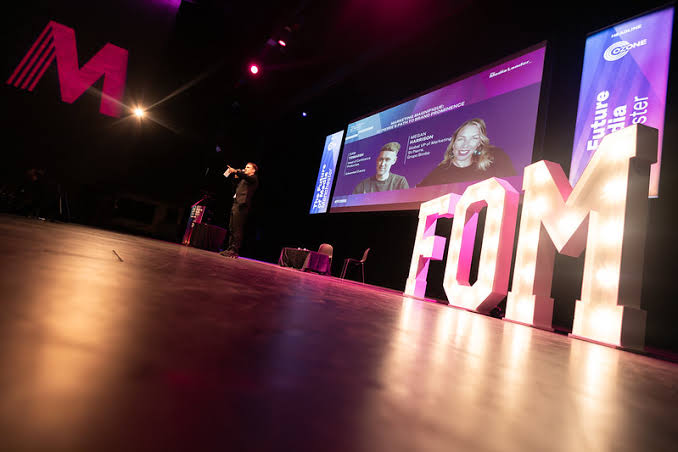
That was the central argument made by Simon at the Future of Media conference in Manchester, where he challenged advertisers, agencies and media owners to consider not just the audiences their media investment reaches, but the wider impact of the platforms that investment supports.
Kilby contrasted the standards expected of traditional media with those applied to social platforms. Content that would never be acceptable on a regulated radio station, television programme or in a magazine can circulate widely on social media, he argued, raising an important question for the advertising industry: why are different standards accepted depending on the platform?
A growing crisis of trust
Kilby pointed to increasing scrutiny of social media platforms from governments, regulators and courts, particularly around their impact on children and young people.
He highlighted legal action in the US over the design of social platforms and features intended to maximise engagement, including infinite scroll, algorithmic recommendations and constant notifications.
Against this backdrop, governments are also considering stronger restrictions on young people's access to social media and some of its highest-risk features.
Kilby argued that this represents a much broader challenge than regulation alone. It is increasingly a question of trust – both public trust in media platforms and the responsibility advertisers have when deciding where to invest.
Research cited in the presentation illustrates the scale of the issue. Bauer Insiders UK research found that 70% of respondents said social media makes them feel anxious, rising to 86% among under-34s, while 90% expressed concern about its impact.
Brand safety remains a msjor concern
For advertisers, there is also a significant commercial dimension.
Kilby highlighted examples of programmatic advertising from major brands appearing alongside highly inappropriate online content, sometimes despite brand-safety verification technology being in place.
He also cited Kantar research showing low levels of marketer confidence in the brand safety of major digital platforms. At the same time, the Advertising Association's All In Census found that 60% of people working in the UK advertising industry do not trust the industry itself.
For Kilby, this creates a fundamental challenge.
Trust is one of the foundations on which advertising and media operate. If audiences do not trust the environments in which brands appear – or the industry responsible for putting them there – that has implications far beyond an individual campaign.
Why audio has reason to be optimistic
Amid the challenges facing the wider media landscape, Kilby believes audio should approach the future with confidence.
Radio has successfully evolved into a broader audio medium, following audiences across broadcast, digital and connected platforms while retaining the characteristics that have traditionally made it such a powerful medium.
Central to that is trust.
As Kilby put it, audio has remained a trusted friend to audiences and commercial partners, something that becomes increasingly valuable in a media environment characterised by misinformation, uncertainty and concerns about online content.
The transformation of radio into audio also demonstrates that established media can successfully embrace technological change without abandoning the qualities that made audiences value them in the first place.
Advertising investment has consequences
One of Kilby's strongest arguments was that advertisers need to think beyond the immediate performance of their media investment and consider what their advertising expenditure ultimately supports.
The world's largest technology companies are investing extraordinary sums in artificial intelligence infrastructure, including data centres, computing capacity and chips. Much of the revenue funding that investment comes from advertising.
For Kilby, that means advertisers cannot entirely separate themselves from the broader consequences of the platforms they fund.
However, he was clear that the answer is not to stop advertising on social media. Social platforms can be highly effective marketing channels and provide powerful opportunities for brands and content creators.
Instead, his argument is that the industry needs to use them more responsibly, while demanding greater accountability from the platforms themselves.
A three-point manifesto for advertising
Kilby concluded by proposing three practical changes for advertisers, agencies and media owners.
1. Prepare for the post-algorithm era
As governments and courts increasingly scrutinise the techniques used by platforms to maximise engagement, advertisers should diversify their media strategies.
Kilby argued that this could mean shifting some emphasis away from hyper-targeted performance activity and towards long-term brand investment, communities and culture.
2. Measure trust as a KPI
The advertising industry has become highly sophisticated at measuring attention – impressions, clicks, views and engagement – but Kilby believes trust deserves the same focus.
Alongside awareness, consideration and market share, brands should increasingly measure and report how much consumers trust them.
3. Introduce an annual Media Impact Report
His most significant proposal was for large advertisers to publish an annual Media Impact Report.
Companies already report extensively on areas such as sustainability, diversity, governance and carbon emissions. Kilby argued that they should apply similar scrutiny to one of their largest areas of expenditure: media.
A Media Impact Report could disclose where advertising money is being invested, the proportion going to social platforms and how businesses are addressing the potential societal and brand-safety risks associated with those investments.
Putting different questions on the agenda
For organisations not yet ready for formal reporting, Kilby suggested a much simpler starting point.
At the next media planning meeting, advertisers and agencies could ask what proportion of their investment is going to platforms facing legal challenges relating to harm to children – and what safeguards those platforms provide for audiences in their own markets.
Simply asking those questions, he argued, begins to change the conversation.
The broader message from the speech was that media investment is about more than buying attention.
Advertising helps fund the media environments in which people spend their time. Those environments can have a positive or negative impact on audiences and wider society.
For advertisers, agencies and media owners, the challenge is therefore not simply to ask where attention can be found, but also which environments deserve investment and trust.
And in an increasingly complex and fragmented media landscape, the value of trusted environments – and trusted audio – may become more important than ever.