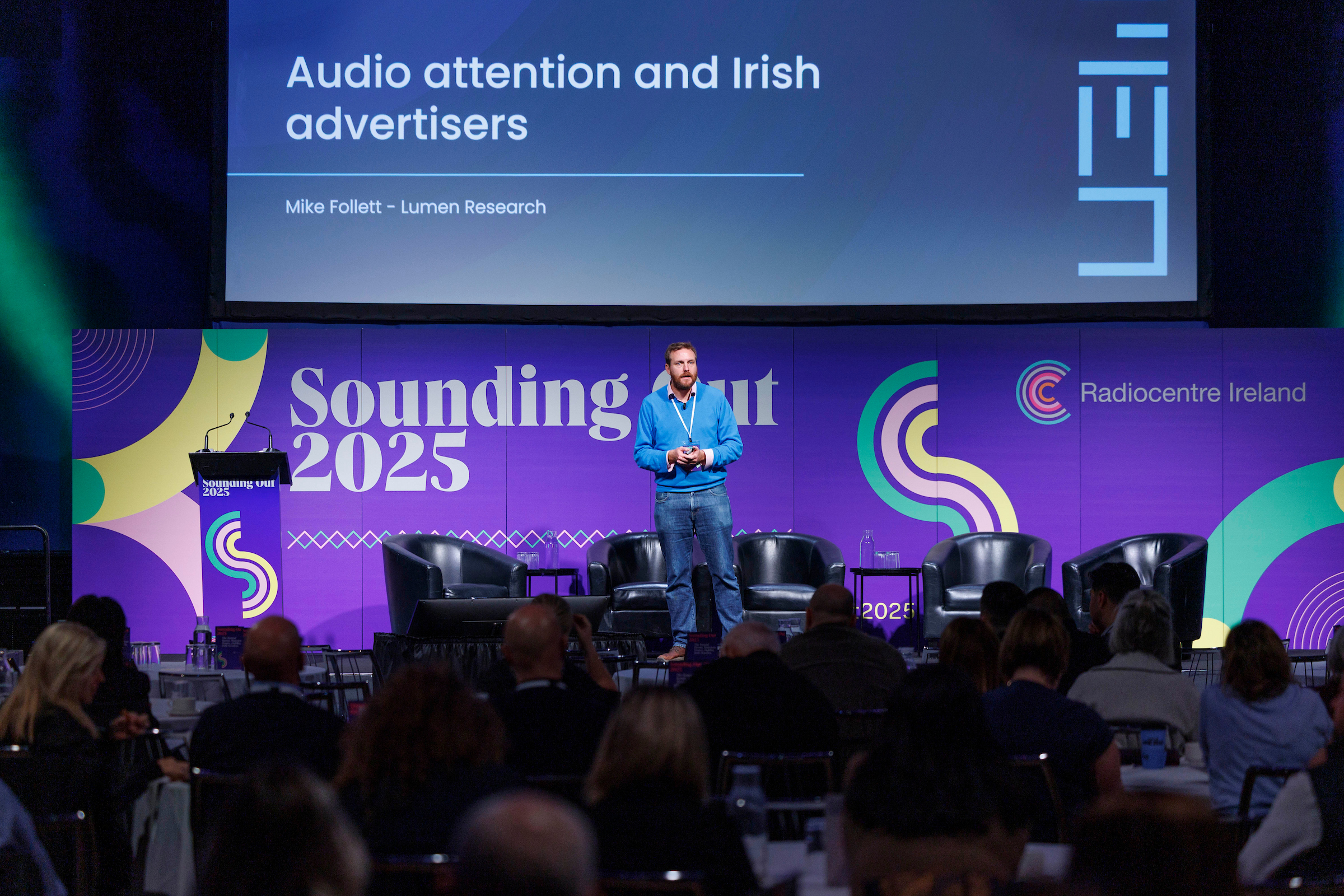
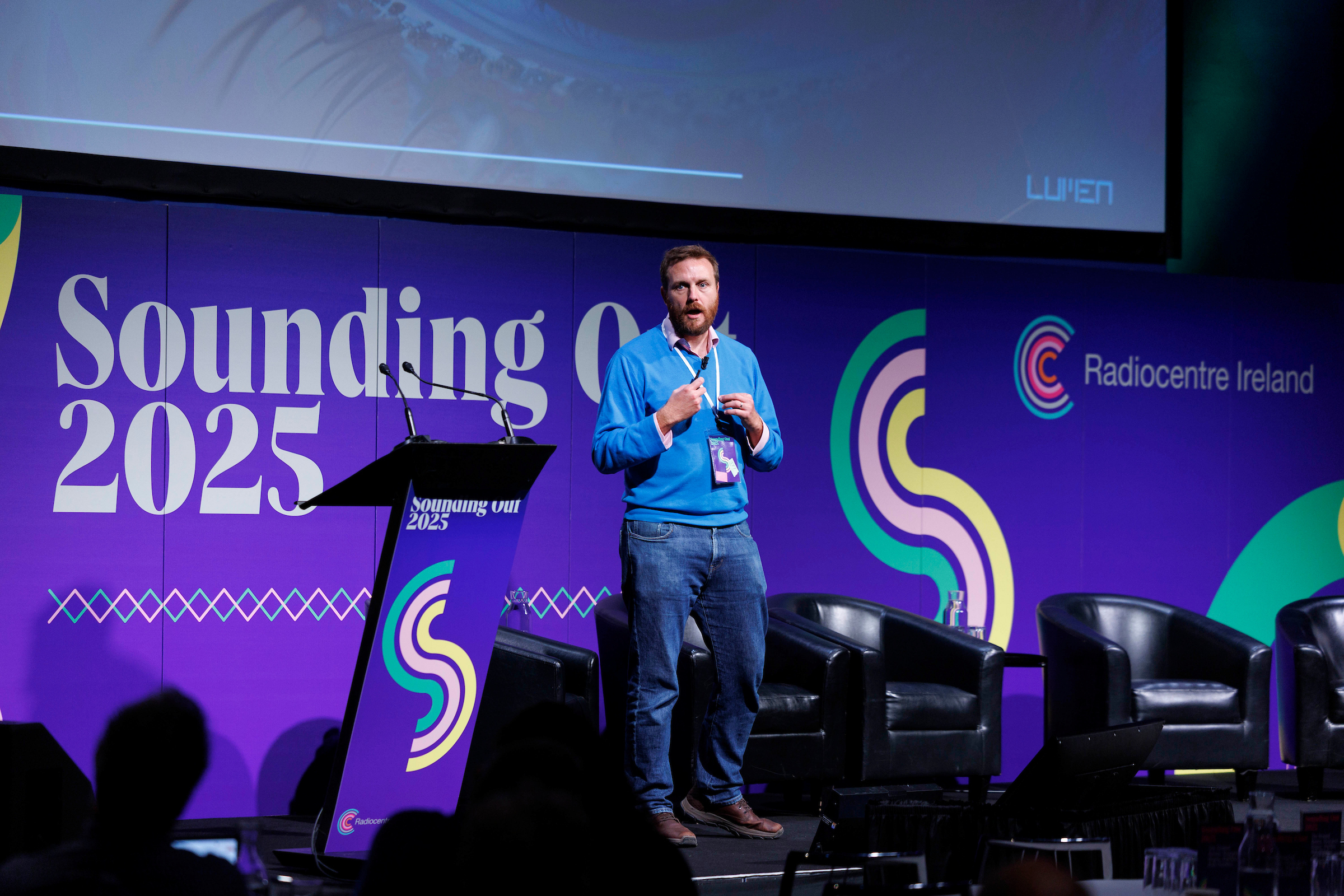
Mike Follett, CEO of Lumen Research gave a presentation that reframes how advertisers should think about attention—and why radio (especially Irish radio) is an undervalued powerhouse. Lumen Research, best known for eye-tracking, measures behavioral signals of attention and links them to action. There is a big gap between what’s viewable/audible and what’s actually viewed/heard. Media trading often pays for the former; while effectiveness depends on the latter.

Lumen uses webcams, sensors and controlled panels across TV, online and cinema to distinguish ads that could be seen from ads that were seen, and for how long. Across media, people ignore more than planners assume (e.g., TV ads play while viewers leave the room; many social ads “appear” but are scrolled past in <1s). Dwell time drives memory in that the more seconds spent looking at ads delivers higher ad recall, though conversion rates from attention to memory vary by medium.
Attention also predicts outcomes: large studies show higher attention aligns with higher brand metrics, and—crucially—profit (econometric work across 144 models finds a near one-to-one relationship between incremental attention and incremental profit).
From eye-tracking to ‘ear’-tracking (by inference):
There is no literal ear-tracking, so Lumen infers audio attention by combining audibility (opportunity to hear) and resulting memory to estimate the visual-equivalent attention. Multiple global studies (US, India, with Spotify/Westwood One/BBC, etc.) show audio generates substantial attention, consistent with behavioral findings about mood and context.
Ireland-specific findings:
Working with dentsu and Radiocentre Ireland, Lumen ran an Irish audio study to build local predictive models. Two standout results:
Why Irish radio scores so highly:
Implications for planners and brands:
Mike finished his presentation by focussing on the fact that attention has economic value and ethical values. Investing in local radio is not only the hard-nosed choice (more cost-effective attention, stronger profit link), it is also a civic one: it supports a regulated, trusted, plural local media ecosystem—part of the democratic “free press” infrastructure. In short: do well by doing good.
You can view a recording of the presentation and download the presentation deck by clicking the buttons below.