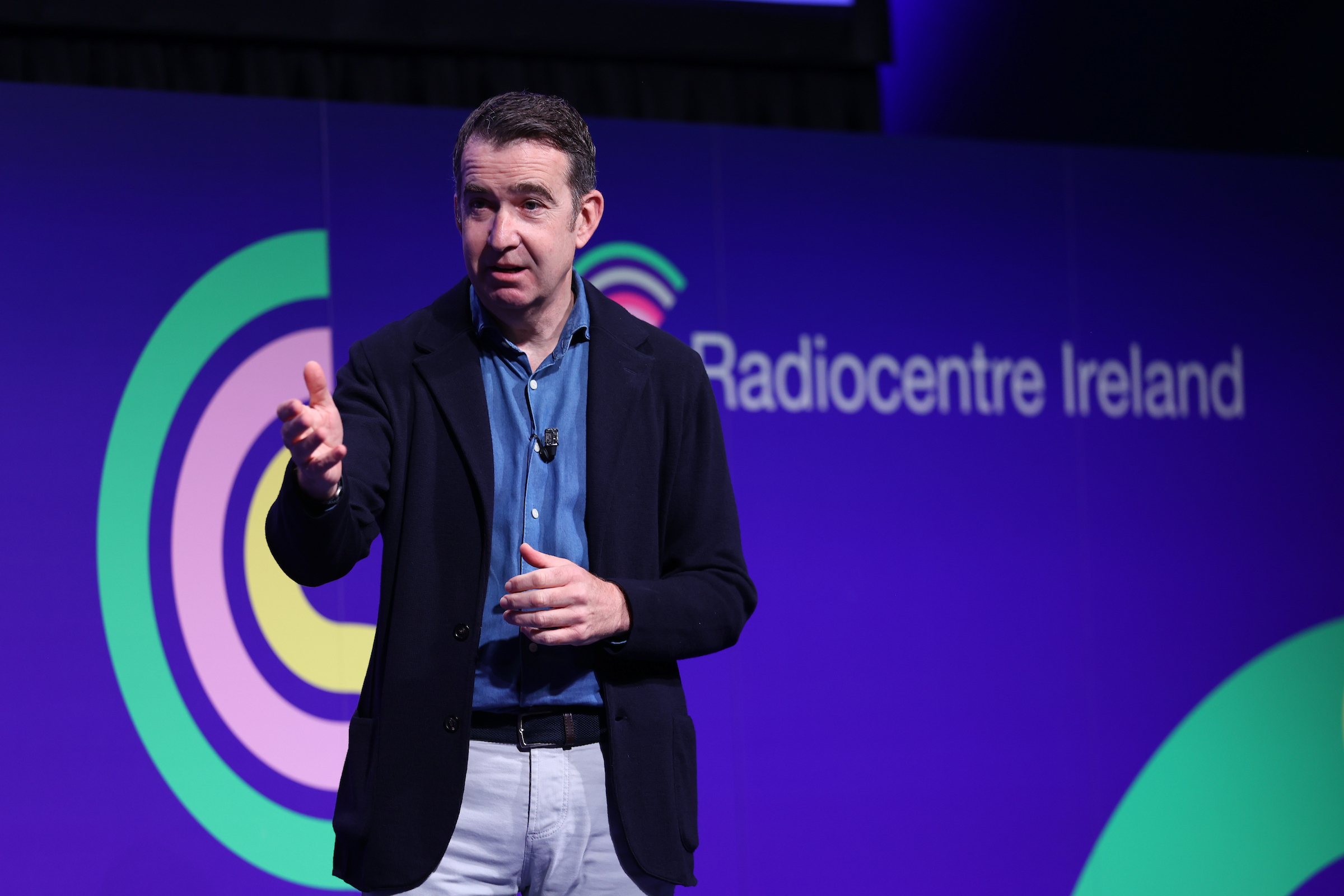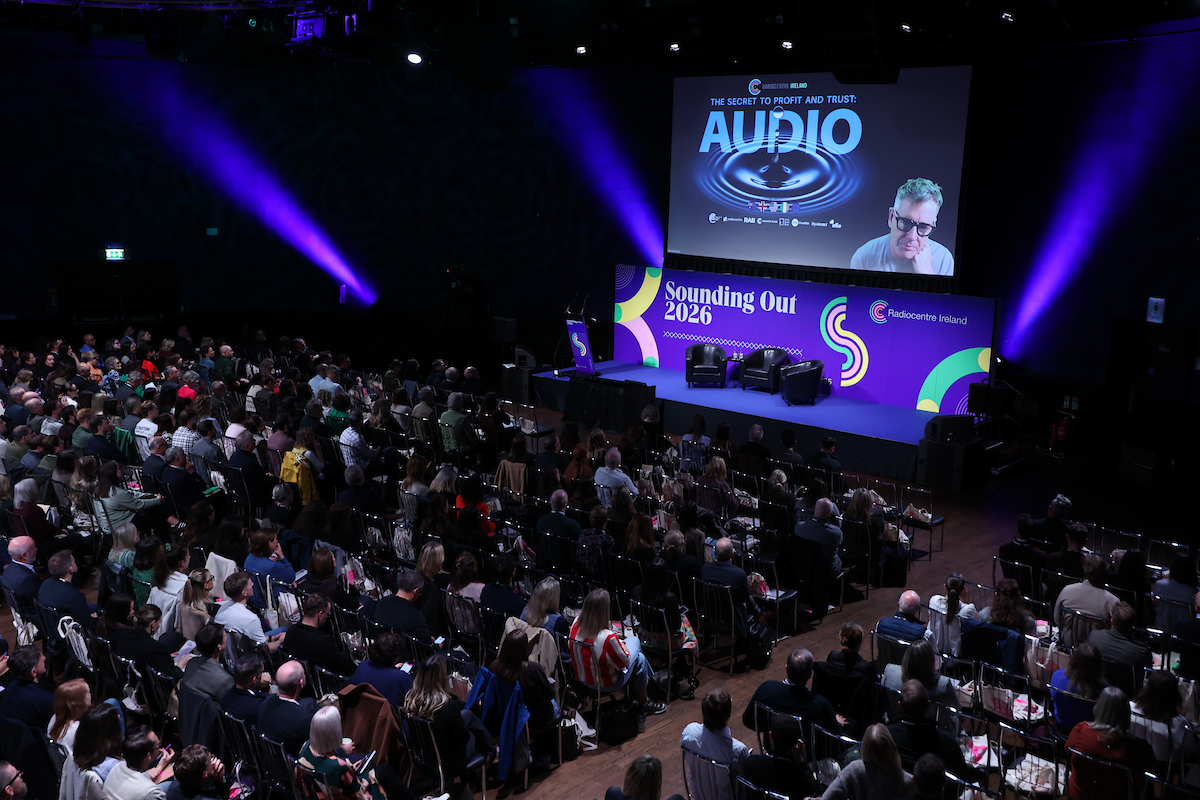
At Radiocentre Ireland's Sounding Out 2026, Professor Mark Ritson presented compelling new evidence of audio advertising's ability to drive business growth, increase profitability and build stronger brands. His central message was simple: audio is a powerful advertising medium, but its greatest benefits come when brands combine emotional creativity, distinctive audio assets and long-term consistency.
Campaigns with audio are 22% more effective.
Drawing on extensive research conducted in partnership with Effie, System1 and international radio industry bodies, including Radiocentre Ireland, Ritson compared advertising campaigns that included audio with those that did not.
The research examined campaigns across the US, Europe, UK and Ireland, and the findings were striking.
With campaigns excluding audio indexed at 100, those incorporating audio achieved an effectiveness index of 122 — a 22% improvement across the business outcomes measured.

The research showed that campaigns including audio outperformed those without audio across every business outcome examined, including:
Ritson acknowledged that adding another media channel will generally improve campaign effectiveness. However, he argued that audio delivers a particularly strong incremental contribution, partly because of its ability to complement other media channels and enhance their effectiveness.
Audio's impact on growth and profitability
Ritson highlighted radio's broad reach and accessibility as particularly valuable for attracting new customers, a critical driver of brand growth.
But perhaps the most significant finding concerned profitability.
Ritson argued that marketers focus too heavily on revenue when their real priority should be profit. One of the most effective ways to increase profitability is to reduce consumers' sensitivity to price, allowing brands to command a premium.
The research found that campaigns including audio were 81% more effective at delivering pricing outcomes, while also generating an average 75% uplift in profit effectiveness compared with campaigns without audio.
Importantly, the positive profit effect increased as audio represented a greater proportion of campaign investment.
Audio also performed strongly in building brand image, differentiation and consumer trust. Ritson pointed to radio's particularly high levels of trust as a medium, suggesting that this credibility can benefit the brands advertising within it.
He also emphasised audio's complementary role within the wider media mix, arguing that it can improve the effectiveness of other advertising channels, sometimes without receiving sufficient credit for its contribution.
The three ingredients of effective audio advertising
Ritson identified three principles that advertisers should follow to maximise audio's effectiveness.
1. Make people feel something
Emotion is fundamental to effective advertising. Ritson argued that consumers generally have little interest in brands or advertising, so the challenge is to create something that makes them feel.
Audio is particularly powerful in this respect, capable of generating emotions ranging from humour and happiness to nostalgia and concern.
He illustrated this with a British Airways Holidays audio advertisement that used a child's voicemail message to create a strong emotional response.
2. Make your brand instantly recognisable
Emotion alone is not enough. Consumers must also recognise which brand is advertising.
Ritson described this as fluency, also known as distinctiveness or codification.
He highlighted research showing that jingles and sonic devices are among the most powerful distinctive brand assets available to advertisers.
Using Australia's Bunnings Warehouse as an example, he demonstrated how a consistent audio identity, maintained over decades, can create immediate brand recognition.
His advice was straightforward: invest in distinctive sonic assets and use them repeatedly.
3. Be consistent — and think in years, not months
Ritson's strongest message concerned the importance of long-term consistency.
He argued that marketers frequently abandon campaigns just as they are beginning to build effectiveness.
The research showed that emotional, distinctive campaigns became substantially more effective when maintained over longer periods, with particularly strong results for campaigns running for three years or more.
His advice was to resist the temptation to constantly develop new advertising. When a campaign is working, keep using it.
The message for advertisers
Ritson concluded by encouraging brands to allocate 10–15% of their advertising budgets to audio and to focus on three priorities: emotional creativity, distinctive sonic branding and long-term consistency.
His message was that audio should not simply be viewed as another channel for delivering advertising messages. It can help brands attract customers, strengthen perceptions, build trust, reduce price sensitivity and ultimately increase profitability.
The opportunity is not just to use more audio, but to use it more effectively — creating advertising that people feel, recognise and remember over time.
You can download the presentation deck and view Mark's presentation by clicking the buttons below.